
Strategic Condo Association Capital Project Planning: A Florida Board’s Guide
Updated: 2 days ago
Is your board treating its upcoming multi-million dollar restoration as a simple maintenance task or a high-stakes risk management operation? In Florida's current regulatory climate, the distinction between these two approaches determines whether a property thrives or faces financial instability. Most board members recognize that the pressure to meet 2026 Structural Integrity Reserve Study (SIRS) deadlines is immense, particularly when residents are already wary of special assessments. It's a significant burden to carry without a background in technical construction or professional project oversight.
This guide establishes a professional framework for condo association capital project planning that prioritizes owner interests and ensures full compliance with Florida law. By adopting a methodical approach to budgeting and execution, you can protect property values and maintain fiduciary accountability. We'll explore the entire project lifecycle, from initial design inception to the final closeout, providing the strategic foresight needed to deliver results on time and under budget. Our "Owners First" philosophy acts as a steady, expert hand to guide your association through these complex environments with absolute reliability.
Table of Contents
The Florida Landscape: Regulatory Compliance and Fiduciary Duty
Effective condo association capital project planning requires a precise understanding of the boundary between minor repairs and major structural remediation. Under Florida Statute 718, board members possess a non-delegable fiduciary duty to maintain the common elements of the property. Whether an association oversees a boutique low-rise or a sprawling multi-tower complex, our specialized oversight adapts to projects of all sizes. We ensure that every initiative, regardless of scale, receives the same meticulous attention to detail and strategic foresight. Historical patterns of deferring structural costs are no longer a viable financial path; they represent a significant liability to the board and the owners they represent.
Mandatory Milestone Inspections and SIRS
The enactment of Florida Senate Bills 4-D and 154 has fundamentally altered the compliance environment by mandating milestone inspections and Structural Integrity Reserve Studies (SIRS). By the 2026 deadlines, associations must demonstrate clear progress toward addressing structural deficiencies identified in these professional reports. These mandatory inspections frequently reveal critical remediation needs that boards can't legally ignore. We act as a steady hand to guide boards through these complex requirements, ensuring that every structural assessment leads to a compliant and actionable execution plan.
The Financial Risk of Underfunded Reserves
Florida law now strictly limits the ability of associations to waive or reduce reserve funding for essential structural components. This legislative shift eliminates the practice of accumulating unfunded liabilities that historically burdened residents with catastrophic special assessments. Our "Owners First" hands-on approach provides a professional framework to manage these financial transitions. By prioritizing the owners' interests from design inception to final closeout, we help boards avoid emergency measures and maintain property values. This methodical process ensures that associations remain fiscally sound while fulfilling their legal obligations under the new regulatory standards.
The Comprehensive Project Lifecycle: From Design to Inception
Successful condo association capital project planning requires a structured transition from engineering assessments to actionable construction documents. It isn't enough to simply possess a reserve study; the board must proactively shape the project's trajectory through a multi-phase lifecycle. This journey begins with a strategic assessment where we translate technical engineering reports into a functional scope of work. By defining these parameters early, boards maintain control over the project's direction and financial impact from the very beginning.
Our "Owners First" philosophy mandates that we establish clear project goals before any contractor engagement occurs. This proactive stance prevents the market from dictating the scope or price. During the design inception phase, we align the architectural vision with the association’s actual budget. This is followed by rigorous pre-construction planning and constructability reviews. These reviews are essential for identifying design conflicts or material shortages before they manifest as expensive change orders during the active construction phase.
Developing a Defensible Project Scope
Boards often struggle to distinguish between "must-have" structural remediation and "nice-to-have" aesthetic upgrades. A defensible scope relies on historical data and professional construction consulting to set realistic financial boundaries. This methodology ensures that the association doesn't exhaust its reserves on cosmetic improvements while failing to meet the structural mandates required by Florida law. Meticulous scope development is the primary defense against scope creep and the resulting resident backlash.
Assembling the Professional Team
The composition of your project team determines the ultimate success of the remediation. Relying on contractor-led design often introduces inherent conflicts of interest that don't favor the association's bottom line. Boards should instead prioritize independent consultants who act as fiduciary advocates. This alignment ensures that every stakeholder, from the design team to the project managers, remains focused on the association’s long-term interests and the successful protection of owner assets throughout the entire lifecycle.
Mitigating Risk with an 'Owners First' Management Philosophy
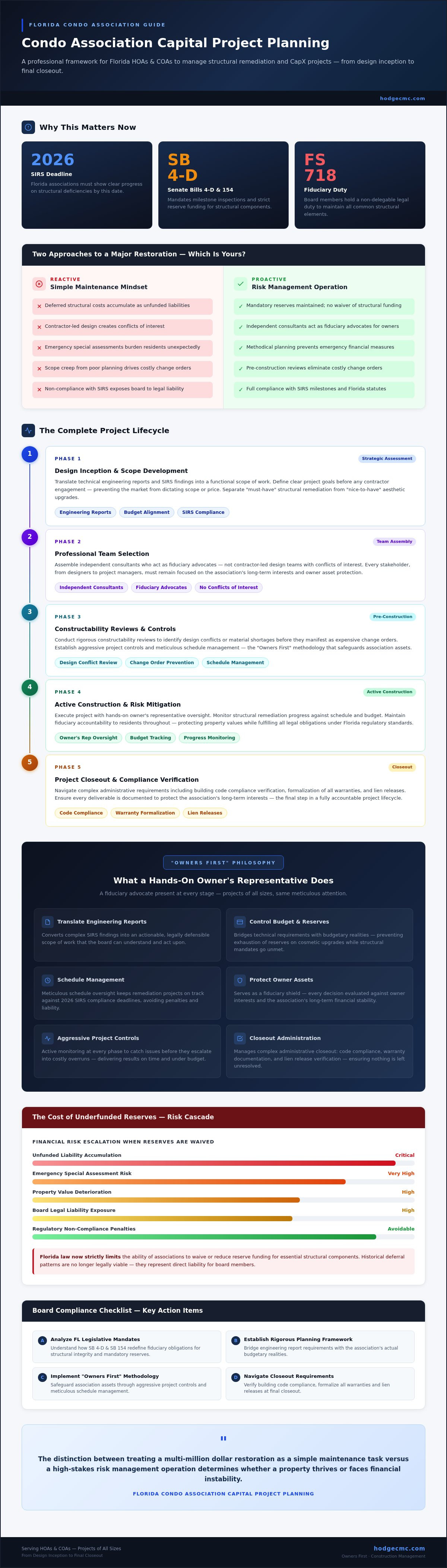
Risk mitigation in construction isn't a passive activity; it requires an uncompromising commitment to the association's financial health. While the previous phases focused on scope and design, the execution phase is where condo association capital project planning faces its true test. Cost overruns and scope creep frequently derail projects when boards lack the technical expertise to challenge contractor claims. A dedicated advocate ensures that the general contractor adheres to established project controls, protecting the owners from unnecessary financial exposure and ensuring the work aligns with the original vision.
Contractor Vetting and Bid Management
Selecting a partner based solely on the lowest bid is a common error that often leads to substandard remediation and future litigation. Boards must prioritize qualified specialists with proven experience in Florida's high-stakes coastal environment. We facilitate a rigorous bid management process that evaluates technical competence and financial stability alongside cost. Properly structured contracts include specific protections against delays and unauthorized changes, ensuring the association remains in control of its assets throughout the construction process.
Active Risk Mitigation Strategies
Maintaining project momentum requires proactive site inspections and stringent quality control protocols. These measures identify deficiencies in real-time, allowing for immediate correction before they become systemic failures. Effective dispute resolution also plays a critical role; we address technical conflicts through professional mediation to avoid the high costs of the courtroom. Managing resident expectations is equally vital, as clear communication reduces the friction caused by disruptive CapX projects. By keeping owners informed of milestones and timelines, boards can mitigate resident backlash and build trust. To secure this level of professional oversight, associations should engage a Construction Management Owner's Representative to serve as their fiduciary voice on-site. This hands-on method ensures the project remains aligned with the "Owners First" philosophy and the association's long-term interests.
The Role of an Owner’s Representative in Project Closeout
The final phase of construction is frequently the most challenging for boards to manage effectively. While the majority of the work may appear complete, the final 10% requires meticulous attention to detail to ensure the association isn't left with unresolved liabilities. An Owner’s Representative serves as a critical safeguard during this transition, verifying that every aspect of the project meets both the original design specifications and local Florida building codes. This rigorous oversight prevents the premature release of final payments before the contractor has fulfilled all contractual obligations.
Comprehensive condo association capital project planning must extend beyond the construction itself into the complex administrative requirements of closeout. This includes the systematic collection of all closed permits, manufacturer warranties, and final lien releases. Without these documents, associations remain vulnerable to legal claims and operational disruptions. We transition the project from active construction back to routine maintenance, ensuring that the new assets are integrated into the association's long-term reserve planning and Structural Integrity Reserve Study (SIRS) updates.
The Final Inspection and Punch List
We conduct a methodical verification of work quality through a detailed punch list process. This isn't a cursory walkthrough; it's an exhaustive technical review of all remediation efforts. By securing these records for the association's permanent files, we provide the board with a defensible history of the project's execution and compliance. This data is essential for future boards and potential buyers, serving as proof of the association's commitment to structural integrity.
Long-Term Asset Protection
Professional closeout is a fundamental requirement for maintaining property values and ensuring future insurance eligibility in the Florida market. A project isn't truly successful until the association is protected from future liability and the work is fully certified. You can protect your association’s interests with HCMC’s Owner’s Rep services to ensure your capital investments are fully realized, documented, and protected for years to come.
Securing Your Association’s Future Through Strategic Oversight
Securing your property's future requires more than just meeting a regulatory deadline. It demands a fundamental shift in how your board approaches fiduciary responsibility and long-term asset protection. By mastering the complexities of condo association capital project planning, you ensure that every dollar spent preserves structural integrity and owner value. We've established that a methodical lifecycle approach, from initial design inception to final project closeout, is the only way to mitigate the risks of cost overruns and technical failure. Hodge Construction Management & Consulting brings decades of experience in Florida's complex construction market to act as your dedicated fiduciary advocate. Our "Owners First" methodology provides the steady, expert hand required for high-stakes remediation and structural CapX projects. Don't leave your community's safety or financial health to chance. Schedule a Consultation with Hodge Construction Management & Consulting to begin planning your next project with absolute confidence.
Frequently Asked Questions
What is the difference between a property manager and an Owner’s Representative?
A property manager oversees daily operations, while an Owner’s Representative provides specialized technical oversight for construction. The Owner’s Rep acts as the board's fiduciary advocate, managing complex project controls and contractor accountability. While property managers are operational generalists, an Owner’s Rep is a seasoned construction professional focused specifically on the high-stakes remediation lifecycle. This ensures the board’s interests remain the primary priority during major capital expenditures.
How do Florida’s new SIRS requirements affect our capital project timeline?
Florida’s Structural Integrity Reserve Study (SIRS) mandates specific 2026 deadlines that force associations to accelerate their capital project schedules. These requirements trigger immediate inspections and remediation needs for critical structural components. Effective condo association capital project planning must now account for these statutory windows to avoid non-compliance. Boards must act now to secure technical partners, as the demand for qualified engineers and project managers will escalate as deadlines approach.
Can our condo association avoid a special assessment for major remediation?
Avoiding a special assessment depends on the association’s historical reserve funding and the scale of the required remediation. While Florida law now limits the ability to waive reserve funding, proactive project planning can mitigate the need for sudden, massive assessments. By implementing rigorous project controls early, boards can phase work or explore financing options that distribute costs more equitably. Strategic foresight prevents the financial instability that often follows deferred maintenance.
What are the most common reasons condo capital projects go over budget?
Budget overruns typically stem from inadequate scope definition, unforeseen site conditions, and poor contractor management. Scope creep occurs when projects expand without formal approval, while a lack of technical oversight allows contractors to submit excessive change orders. Professional condo association capital project planning identifies these risks during the pre-construction phase. This process establishes a defensible budget that accounts for technical contingencies and the market volatility inherent in Florida construction.
Why is design inception the most critical phase for cost control?
Design inception is the most critical phase because it sets the financial and technical parameters for the entire project. Decisions made during this stage determine the materials, methods, and scope before any physical work begins. By aligning the architectural vision with the association’s actual budget during inception, boards prevent expensive redesigns or mid-construction adjustments. This proactive alignment is the most effective defense against catastrophic cost escalations and schedule delays.

Comments