
Integrating Smart Technology in HOA Capital Projects: A Strategic Framework for Boards
The most expensive capital project your Florida association will ever face isn't a roof replacement or a structural repair. It's a technology implementation that fails or becomes obsolete three years after installation. Most boards recognize that integrating smart technology in HOA capital projects is no longer optional for maintaining competitive property values. Yet, the fear of technical obsolescence and the challenge of vetting specialized contractors often lead to project delays or significant cost overruns. You're right to be concerned about the risks inherent in complex remediation and automation upgrades.
This guide provides a strategic framework to help you navigate these complexities while protecting the owners' financial interests. You'll learn how to secure a future-proofed building and lower long-term operational costs through expert advocacy. We examine the methodical approach required to manage the full project lifecycle from design inception to final closeout. This ensures every technological investment is backed by professional construction management and a commitment to the "Owners First" philosophy.
Table of Contents
The Evolution of HOA Capital Projects: Why Smart Technology is No Longer Optional
The paradigm for Florida condominium remediation has undergone a fundamental shift. Modern capital improvement initiatives no longer treat technology as a peripheral luxury; instead, they recognize it as a core structural component. Integrating smart technology in HOA capital projects is now a fundamental requirement for maintaining the long term viability of high density residential assets. Boards are transitioning from managing disparate, resident level gadgets to overseeing sophisticated, building wide IoT infrastructure.
Centralized building automation systems (BAS) serve as the operational nervous system for modern high rises. These systems allow for proactive management of critical infrastructure rather than reactive repairs. From an economic perspective, the drivers are undeniable. In the current Florida insurance climate, demonstrating robust risk mitigation through technology can influence premium stability. Strategic technology adoption also yields measurable reductions in recurring operational expenses through optimized resource consumption.
Board members hold a fiduciary responsibility to preserve and enhance the association’s physical assets. This duty necessitates a methodical, "Owners First" approach to project planning that anticipates future technical requirements. Failing to incorporate scalable infrastructure during major remediation projects often leads to premature technical obsolescence and costly retrofitting. Professional construction management ensures that these technological foundations are laid correctly during the initial CapX phase.
High-Impact Smart Infrastructure for Florida Associations
Strategic selection of technology during the design inception phase ensures maximum return on investment. The following systems represent critical priorities for Florida associations:
Automated leak detection: These systems utilize sensors and motorized shut off valves to prevent catastrophic water damage in high density buildings, directly protecting the owners' financial interests.
Climate and lighting controls:Integrating smart technology in HOA capital projects often involves energy efficient HVAC and lighting systems that lower the community’s carbon footprint and utility costs.
Integrated access control: Modern security platforms provide enhanced safety through encrypted credentials and real time monitoring of common areas, increasing overall property value.
Mitigating Risk with an 'Owners First' Advocacy Approach
Vetting technology in a high-stakes construction environment requires more than just technical savvy; it demands fierce advocacy. When integrating smart technology in HOA capital projects, boards often face high-pressure sales from vendors. Without independent representation, an association risks installing proprietary systems that lead to vendor lock-in. Our "Owners First" philosophy ensures that every technical decision is scrutinized for long-term viability and financial accountability. This methodical approach identifies hidden risks of technical obsolescence before a single wire is pulled.
Boards must look beyond the immediate "cool factor" of gadgets to understand the strategic benefits of smart buildings. These benefits, such as significant energy savings and reduced operational overhead, are only achievable if the technology integrates seamlessly with the building’s existing mechanical and structural systems. We protect the association’s budget through rigorous contract review and meticulous constructability analysis. This ensures that tech goals align perfectly with the broader remediation or CapX scope, preventing costly mid-project changes.
The Owner's Rep vs. The Technology Vendor
A technology vendor’s primary objective is to sell specific hardware or software packages. They rarely account for the interdisciplinary conflicts that arise between architects, engineers, and general contractors. HCMC acts as the board’s dedicated representative, managing these complex relationships from design inception through project closeout. We provide the objective oversight necessary to vet specialized contractors fairly. For boards seeking to mitigate risk, engaging expert construction consulting services provides the necessary buffer against biased vendor assessments.
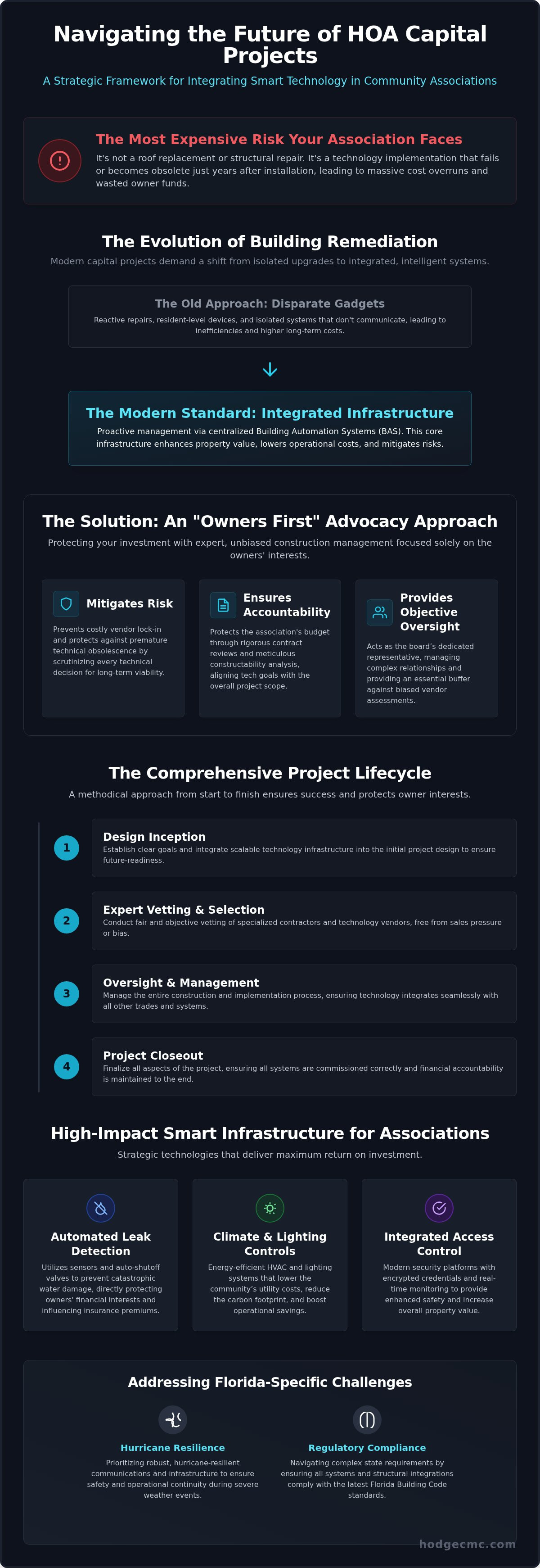
The Comprehensive Lifecycle of Smart Tech Integration in Construction
Success in integrating smart technology in HOA capital projects depends on a disciplined, end-to-end management lifecycle. It begins at design inception. Here, we collaborate with stakeholders to define precise technical requirements and project scope. This early alignment prevents scope creep and ensures the technology serves the owners' long term interests. During pre-construction, we vet specialized contractors and integrate smart tech milestones into the master schedule to avoid cascading delays.
Active management requires constant vigilance throughout the remediation process. We oversee the installation of complex infrastructure during major building remediation to ensure compliance with design specifications. Utilizing IoT in construction allows for real time monitoring of jobsite safety and equipment performance. This methodical oversight ensures that integrating smart technology in HOA capital projects doesn't compromise the structural timeline or the association's budget.
Strategic Planning and Budgeting for CapX
Boards must develop realistic budgets that account for more than just initial hardware costs. A comprehensive CapX plan includes software licensing, integration fees, and long term maintenance reserves. We manage the RFP process to ensure competitive and transparent bidding. This protects the association from inflated vendor quotes and ensures every dollar spent contributes to the project's ultimate success.
Ensuring Operational Excellence at Closeout
Project closeout is the most critical phase for long term reliability. We lead a rigorous commissioning process to verify that every system performs as intended before final payment is released. This includes transferring technical documentation and providing hands on training for the association's maintenance team. For boards ready to secure their building's future, our construction management services provide the expert advocacy needed from inception to closeout.
Florida-Specific Challenges: Resilience and ROI in Smart Building Projects
Florida’s unique regulatory landscape and harsh coastal climate demand a specialized strategy for integrating smart technology in HOA capital projects. Boards must ensure strict adherence to the Florida Building Code, especially as the 9th Edition takes effect on December 31, 2026. Beyond basic compliance, the primary focus for associations remains hurricane resilience. This requires integrating hardened communication networks and automated backup power systems into the building’s essential infrastructure. These systems ensure the association maintains operational control during and after catastrophic weather events, directly fulfilling the board’s duty to protect the owners' safety and physical assets.
The return on investment for smart infrastructure is particularly high in Florida’s high-humidity and high-salinity environments. Salt air significantly accelerates the degradation of mechanical components and structural steel. Smart sensors provide real-time data on moisture intrusion and the performance of cathodic protection systems, allowing for proactive maintenance before expensive structural remediation becomes necessary. Modern buyers increasingly prioritize these technological safeguards when evaluating properties. Associations that invest in future-proofed infrastructure attract discerning buyers, resulting in higher property valuations and improved insurance eligibility.
Remediation and Smart Tech: A Dual Approach
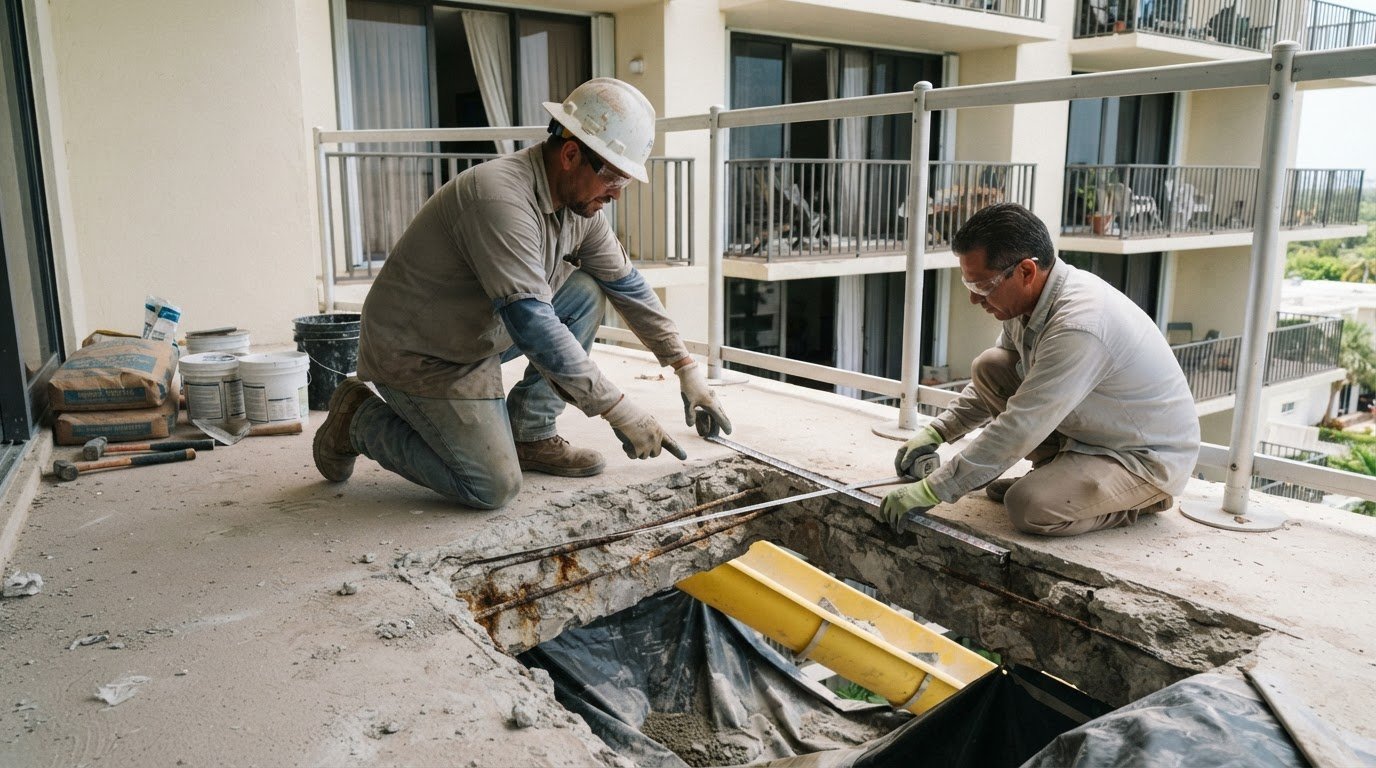
The most efficient opportunity for integrating smart technology in HOA capital projects occurs during active structural remediation. When a building undergoes extensive concrete restoration or roofing replacement, the "Owners First" strategy leverages existing scaffolding and open structural access to install embedded sensors and high-speed data backbones. HCMC manages the complex intersection of structural repair and technical modernization with meticulous precision. We ensure that the installation of monitoring equipment enhances, rather than compromises, the integrity of the repair. This dual approach maximizes the impact of every CapX dollar, delivering a building that is both structurally resilient and technologically advanced from inception to closeout.
Securing Your Association's Technological Future
Boards must view technology through the lens of long term structural integrity and financial stability. Successfully integrating smart technology in HOA capital projects requires a fundamental shift from reactive gadgets to building wide infrastructure designed to withstand Florida’s unique environmental and regulatory pressures. By prioritizing independent, Florida based advocacy, associations effectively avoid the pitfalls of vendor lock in and premature technical obsolescence. Our comprehensive lifecycle management ensures your project remains on schedule and within budget from design inception to final closeout.
The "Owners First" methodology serves as the unwavering foundation for every decision, guaranteeing that technical upgrades translate into measurable property value and sustained operational efficiency. Your community deserves a future proofed building that remains resilient and competitive for decades to come. Professional oversight is the only way to ensure these complex systems deliver the promised returns and protect the association's long term health.
Schedule a Strategic Consultation with HCMC for Your Next Capital Project to protect your owners' interests through expert representation.
Frequently Asked Questions
What is the difference between an Owner's Representative and a General Contractor in tech projects?
An Owner's Representative serves as the association's dedicated advocate, whereas a General Contractor focuses on executing the construction contract. For technology projects, the Owner's Rep provides independent oversight to ensure technical systems align with the board's strategic objectives. We vet specialized contractors and manage interdisciplinary conflicts that a General Contractor might overlook. This ensures the project remains within budget and meets all technical specifications without vendor bias.
How does smart technology integration impact an HOA's reserve study and CapX budget?
Integrating smart technology in HOA capital projects necessitates a revision of the reserve study to account for hardware lifecycles and recurring software costs. While the initial CapX budget increases, the long term reduction in utility and insurance costs provides a measurable return. We help boards structure these budgets to ensure that future technical replacements are fully funded. This prevents financial strain and protects the owners' equity over the building's lifecycle.
Can smart technology be integrated into older Florida condo buildings during remediation?
Older Florida buildings are excellent candidates for technological retrofitting during structural remediation. Exposing the building's core during concrete restoration or roof replacement allows for the cost effective installation of data backbones and sensors. We manage this intersection of structural repair and technical modernization to ensure older assets remain competitive. This methodical approach allows legacy associations to implement advanced building automation systems that were previously considered impossible to install.
What are the biggest risks of implementing IoT in a community association?
Technical obsolescence and proprietary vendor lock in represent the most significant risks for community associations. Boards often find themselves tethered to a single provider for expensive, outdated hardware. We mitigate these risks by advocating for open, scalable systems that integrate with multiple platforms. Our process ensures that the association maintains control over its data and infrastructure. This protects the board from the financial fallout of failed or unsupported technological investments.
How does HCMC ensure that smart systems remain viable for the next 10-15 years?
We ensure long term viability by prioritizing modular infrastructure and open communication protocols during the design inception phase. This allows associations to replace individual components as technology evolves without a complete system overhaul. Our comprehensive management lifecycle includes rigorous commissioning and the delivery of exhaustive documentation at project closeout. Integrating smart technology in HOA capital projects with this level of strategic foresight guarantees that systems remain functional and relevant for over a decade.
Comments