
Condo Association Construction Risk Management: A Florida Board’s Guide to Asset Protection
Updated: 2 days ago
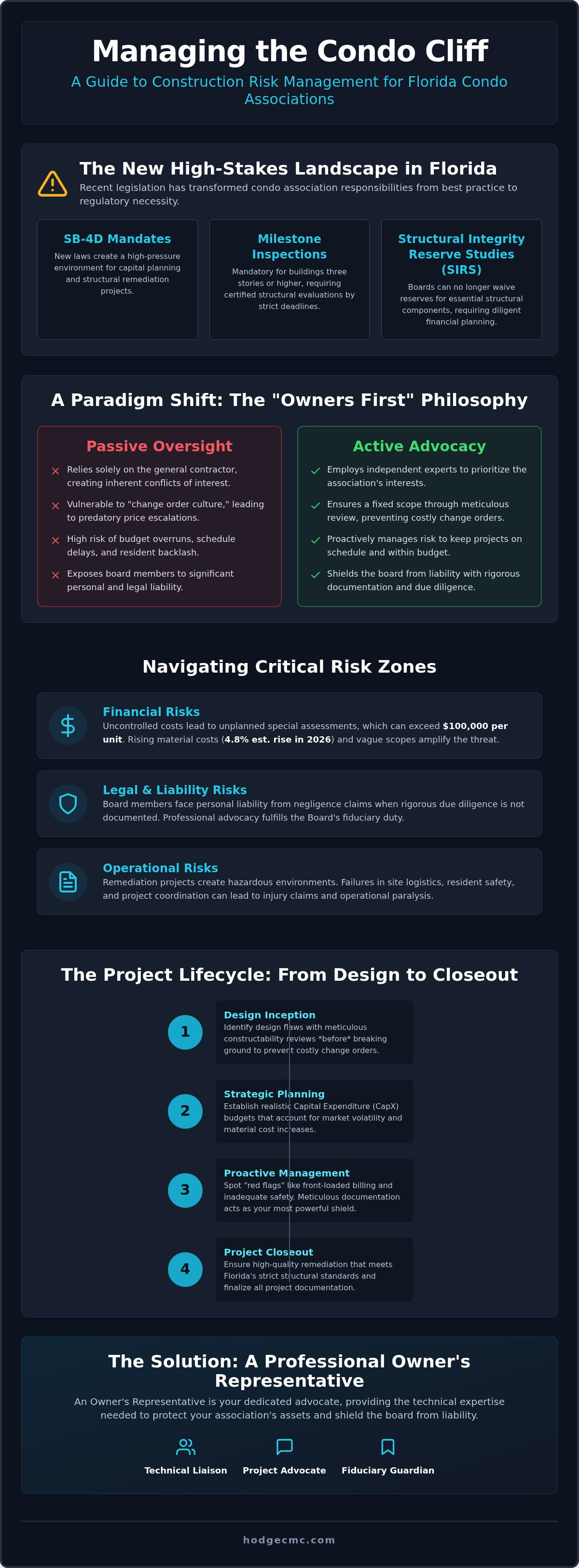
The era of passive oversight for Florida condo boards has ended; today, a single structural oversight can trigger a "condo cliff" that devalues every unit in your building. Managing a major remediation project requires a sophisticated approach to condo association construction risk management, especially when facing the strict deadlines of SB-4D and the constant threat of resident backlash over special assessments. You likely feel the weight of these high-stakes decisions and the lack of technical expertise required to oversee general contractors effectively.
This guide provides a strategic framework for mitigating financial and legal liabilities through professional advocacy. By adopting an "Owners First" philosophy, you can ensure your project remains on schedule and within budget. We will explore the lifecycle of a project from design inception to final closeout, ensuring your board maintains control while shielding the association from liability claims and meeting Florida’s rigorous structural standards.
Table of Contents
The Landscape of Condo Association Construction Risk in Florida
Effective condo association construction risk management involves the systematic identification and neutralization of threats to the association's financial health and physical assets. In Florida, this discipline has transitioned from a best practice to a regulatory necessity. The implementation of Senate Bill 4-D and subsequent legislation mandates that associations execute Milestone Inspections for buildings three stories or higher and complete a Structural Integrity Reserve Study (SIRS) by the 2025 or 2026 deadlines. These regulations eliminate the board's ability to waive reserves for essential structural components, creating a high-pressure environment for capital planning. A Board’s fiduciary duty constitutes a binding legal obligation to prioritize the collective interests of the association members through informed, diligent, and documented decision-making processes.
Traditional property management often lacks the specialized technical expertise required for professional construction management. While managers excel at daily operations, they aren't equipped to scrutinize engineering specifications or verify complex contractor billing. This gap in technical oversight leaves the association vulnerable to exploitation and structural failure.
Financial and Legal Liabilities for Board Members
Board members face significant personal liability risks when they fail to document rigorous due diligence during high-stakes projects. Negligence claims often arise when boards don't seek professional advocacy to oversee general contractors. Without proper project controls, budget overruns lead to unplanned special assessments. In some coastal buildings, these assessments have exceeded $100,000 per unit, triggering severe community unrest and legal challenges.
Operational Risks in High-Stakes Remediation
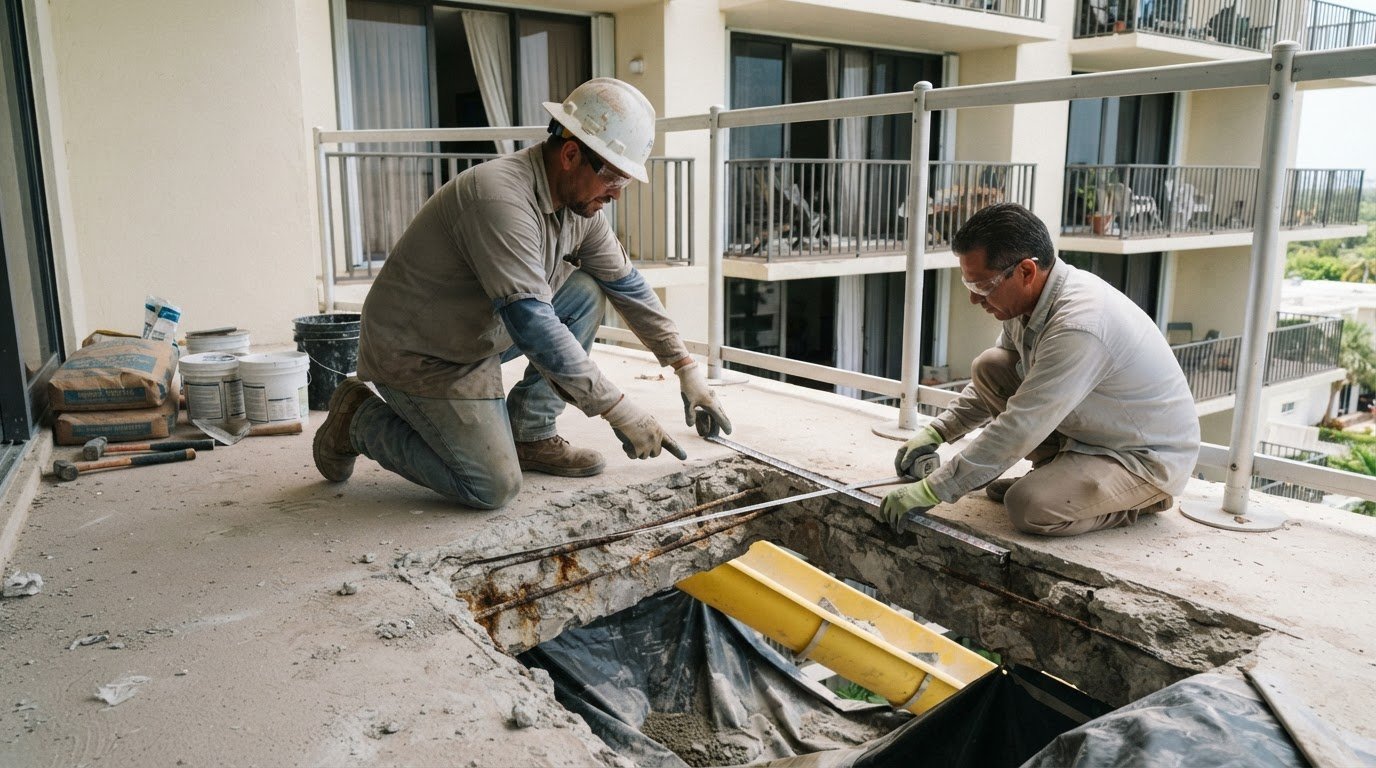
Remediation projects create hazardous environments where resident safety and access must be meticulously coordinated. A failure in site logistics can lead to injury claims or operational paralysis. Additionally, Florida’s contracting landscape is often characterized by a "change order" culture where vague initial scopes lead to predatory price escalations mid-project. Professional oversight ensures the scope remains fixed and the association's assets remain protected from financial exploitation.
Mitigating Risk Through the 'Owners First' Management Philosophy
Effective condo association construction risk management relies on a fundamental shift from passive observation to active, independent advocacy. The "Owners First" methodology dictates that every decision, from material selection to schedule adjustments, prioritizes the association's long-term asset value over a contractor's profit margins or speed. It's essential to recognize that a general contractor, while a necessary partner, operates with inherent conflicts of interest. Relying on them as the sole source of truth creates a structural vulnerability. Instead, boards should utilize independent project controls to proactively manage risks through transparent reporting and objective data verification.
Strategic Project Planning and Development
Success begins at design inception. Meticulous constructability reviews allow boards to identify design flaws before ground is broken, preventing the costly change orders that plague Florida remediation projects. Establishing realistic Capital Expenditure (CapX) budgets is equally critical. With the median cost for residential construction rising 4.8% in 2026 and increasing tariffs on building materials like steel and lumber, associations must account for market volatility. Proactive management identifies schedule slippage before it impacts the bottom line, ensuring the community avoids the financial cliff of underfunded projects.
The Value of Technical Expertise in Risk Identification
Seasoned consultants provide the technical lens required to spot "red flag" behaviors, such as front-loaded billing or inadequate site safety protocols. Meticulous documentation acts as the association’s most powerful shield, creating a forensic record that prevents future litigation. By engaging specialized construction consulting, boards fulfill their fiduciary duty with confidence. This hands-on approach to condo association construction risk management ensures the board doesn't face the financial shocks of mismanagement while ensuring high-quality remediation that meets Florida’s strict structural standards.
Navigating the Construction Lifecycle: From Design to Closeout
Comprehensive condo association construction risk management mandates a methodical presence from the initial design inception through to the final project closeout, as boards often mistakenly assume that liability mitigation begins only when equipment arrives on-site. In reality, the most critical defensive measures are established during the design phase, where a well-defined scope of work acts as the primary deterrent against the predatory "change order" culture that frequently inflates remediation costs. Strategic planning ensures that the association's technical requirements and the owners' interests are fully integrated into the construction documents long before the first shovel hits the ground.
The pre-construction phase demands rigorous vetting of general contractors and a sophisticated understanding of Top Risk Management Issues for Florida Condo Developers, including the acquisition of performance bonds and specialized insurance coverages. For Florida associations, verifying that a contractor maintains adequate Commercial General Liability (CGL) coverage is a non-negotiable step in asset protection. This phase establishes the rules of engagement and refines the project scope to eliminate the ambiguity that contractors often exploit for financial gain.
Design Inception and Pre-Construction Controls
Defining a clear, technical scope of work during the design inception stage is the board's most effective tool for minimizing future change orders. Performance bonds provide a vital financial guarantee that the project will reach completion according to the contract, shielding the association from the risks of contractor insolvency or abandonment. These controls establish a foundation of accountability that protects the community's financial health from the outset.
Execution and Project Closeout Procedures
Managing the execution phase requires real-time monitoring of quality, safety, and schedule adherence through daily oversight to ensure contractor accountability and prevent minor errors from escalating into structural failures. The closeout phase is equally critical; it's not complete until the association has secured all final lien waivers, warranties, and permit sign-offs. A meticulous final walkthrough and the resolution of a comprehensive "punch list" ensure the board only issues final payment when every contractual obligation has been met. To safeguard your association through every phase of the construction lifecycle, consult with our construction management owner's representative team.
The Role of an Owner’s Representative in Protecting Association Assets
An Owner’s Representative serves as the Board’s most effective shield against project failure by providing the technical oversight that volunteer directors often lack. In the specialized field of condo association construction risk management, this role functions as a dedicated technical liaison between the Board, architects, and general contractors. While a contractor focuses on production and profit, the Owner’s Representative focuses exclusively on protection. This professional management pays for itself through aggressive cost avoidance. By scrutinizing pay applications and neutralizing predatory change orders, an advocate ensures the association’s capital is deployed with maximum efficiency. Hodge Construction Management & Consulting provides this specialized, professional-grade oversight for projects of all sizes; our "Owners First" approach ensures that every remediation effort benefits from a seasoned, methodical hand.
Choosing the Right Advocacy Partner in Florida
Boards must distinguish between a traditional 'Project Manager' and a specialized 'Owner's Representative'. A project manager often focuses on the logistics of the build, whereas an Owner's Representative acts as the association’s fiduciary advocate. When selecting a construction management owner's representative, look for a firm with deep experience in Florida’s specific regulatory environment. You need a partner who understands that their loyalty belongs exclusively to the association, independent of any contractor’s interests or industry alliances.
Ensuring Long-Term Asset Viability
Professional management extends beyond the final walkthrough to protect the association’s 10-year maintenance horizon. By ensuring that every structural repair meets Florida’s statutory compliance standards, an Owner's Representative secures the building’s long-term viability. Finalizing a project with meticulous attention to structural integrity prevents the "condo cliff" and ensures the association remains a desirable, financeable community for years to come. This methodical closeout process is the final, essential step in a comprehensive risk management strategy.
Securing Your Association’s Future Through Strategic Advocacy
Navigating the complexities of Florida’s structural safety requirements demands more than just a general contractor; it requires a dedicated representative who prioritizes the association's assets. By implementing a rigorous approach to condo association construction risk management, boards can effectively shield themselves from liability while ensuring that remediation projects meet the highest quality standards. The key lies in maintaining independent oversight from design inception through to the final project closeout, neutralizing financial threats before they escalate into resident backlash or special assessments.
HCMC brings decades of high-level Florida construction expertise and a meticulous, process-driven management philosophy to every COA and HOA project. We act as your steady, expert hand, ensuring your community remains compliant and financially sound through specialized remediation and CapX oversight. Protect your association’s interests with HCMC’s 'Owners First' representation. You don't have to face these high-stakes capital projects alone; with professional advocacy, your board can lead the community toward long-term stability and success.
Frequently Asked Questions
What is the difference between an Owner’s Representative and a General Contractor?
An Owner’s Representative acts as a fiduciary advocate, whereas a General Contractor is responsible for physical construction. In the context of condo association construction risk management, the Owner’s Representative provides the independent oversight necessary to verify that work adheres to technical specifications. This professional layer of protection ensures the board receives objective data rather than relying solely on the builder’s reports, effectively neutralizing the inherent conflicts of interest in contracting.
How does Florida’s SB-4D legislation affect our construction risk management plan?
SB-4D fundamentally alters condo association construction risk management by mandating Milestone Inspections and Structural Integrity Reserve Studies (SIRS) for buildings three stories or higher. These statutory requirements remove the board’s authority to waive or underfund reserves for essential structural components. Consequently, associations must now execute remediation projects under rigid state deadlines, making professional advocacy critical to avoid the severe legal and financial liabilities associated with non-compliance or structural failure.
Can a property manager handle construction risk management for a large CapX project?
Property managers typically lack the specialized engineering and construction management expertise required to oversee high-stakes Capital Expenditure (CapX) projects. While they are proficient in community operations, they aren't equipped to scrutinize technical change orders or verify complex structural remediation. Engaging an Owner’s Representative provides the board with a dedicated technical liaison, allowing the property manager to maintain daily operations while an expert ensures the project is completed on time and within budget.
What are the most common risks during a condo remediation project in Florida?
The most prevalent risks involve predatory change order practices, material cost volatility, and unforeseen structural deterioration discovered during the demolition phase. Managing resident safety within active construction zones also presents significant operational liability. Without meticulous project controls and independent verification, these factors frequently lead to substantial budget overruns and special assessments. Professional oversight is necessary to neutralize these threats and protect the association’s financial health and long-term asset value.
Is an Owner's Representative necessary for smaller association projects?
Professional oversight is a critical safeguard for projects of all sizes because the risk of financial mismanagement is proportional to the association's assets. By applying an 'Owners First' hands-on approach, an Owner’s Representative ensures that associations of every scale receive specialized advocacy. This methodical presence prevents minor oversights from escalating into major liabilities, ensuring that even smaller remediation efforts are completed to the highest professional standards.
Comments