
HOA Capital Improvement Guide for Florida Boards
What if the primary risk to your Florida community isn't the aging infrastructure itself, but a fragmented approach to managing its restoration? For many boards, the pressure of complying with milestone inspections and Structural Integrity Reserve Studies (SIRS) requirements feels like an insurmountable burden. You likely recognize that professional HOA capital improvement planning is no longer optional; it's a critical safeguard against the project delays and poor quality work that have plagued associations in the past.
We understand the legitimate fear of resident backlash when special assessments become necessary to fund these high-stakes remediation efforts. This guide provides a professional framework to navigate these complexities, ensuring your large-scale projects are delivered on time and within budget. We'll explore how a dedicated owner's representative minimizes liability and protects property values by maintaining an "Owners First" perspective from design inception through final project closeout. By shifting from a maintenance mindset to a construction advocacy framework, your board can act with the authority and precision required in Florida's rigorous regulatory environment.
Table of Contents
Defining HOA Capital Improvement vs. Routine Maintenance
Distinguishing between asset preservation and structural restoration remains the foundation of effective HOA capital improvement planning. Routine maintenance addresses recurring operational needs, whereas capital improvements focus on value enhancement and the remediation of major building systems. While the IRS "one-year rule" serves as a basic accounting benchmark for expenses that provide benefit beyond twelve months, Florida associations must prioritize the technical complexity and legislative mandates surrounding structural integrity. Specifically, existing unit-owner-controlled associations with buildings three or more stories high must recognize the December 31, 2025, deadline for completing a Structural Integrity Reserve Study (SIRS).
Board members maintain a strict fiduciary duty to identify when a community asset has reached its end of useful life. Executing projects like total roof replacements, concrete restoration, or modernizing amenities requires strategic foresight rather than reactive fixes. Failing to act on these needs compromises the safety of the residents and the financial viability of the association. Proactive boards utilize these transitions to enhance property values and ensure compliance with modern building codes.
To better understand this concept, watch this helpful video:
Identifying Capital Expenditure (CapX) Needs
A comprehensive Reserve Study acts as a vital roadmap for long-term financial health by forecasting component lifecycles. Utilizing professional assessments ensures that the project scope remains accurate and prevents the costly change orders that arise from poor initial vetting. For Florida condominium remediation, Capital Expenditure represents the comprehensive investment required to restore structural integrity and ensure long-term building safety through high-stakes engineering and construction interventions.
The Financial Impact of Poor Planning
Deferred maintenance creates a compounding financial burden that leads to exponentially higher restoration costs. Strategic timing allows boards to avoid the sudden, massive special assessments that frequently trigger community instability. By adopting an "Owners First" approach, boards ensure that project funding aligns with realistic construction timelines and minimizes the risk of budget overruns. Success requires a methodical transition from daily operations to high-level project management.
The Capital Improvement Lifecycle: From Design to Bid Management
Successful HOA capital improvement planning requires a methodical transition from conceptualization to technical execution. Phase 1 centers on strategic advice and scope development to ensure project viability before significant capital is committed. During Phase 2, we implement budget creation and rigorous constructability reviews to identify potential field issues before they manifest as costly delays. This proactive stance ensures that the board maintains control over the project's financial trajectory from the very beginning.
The Design Inception Phase
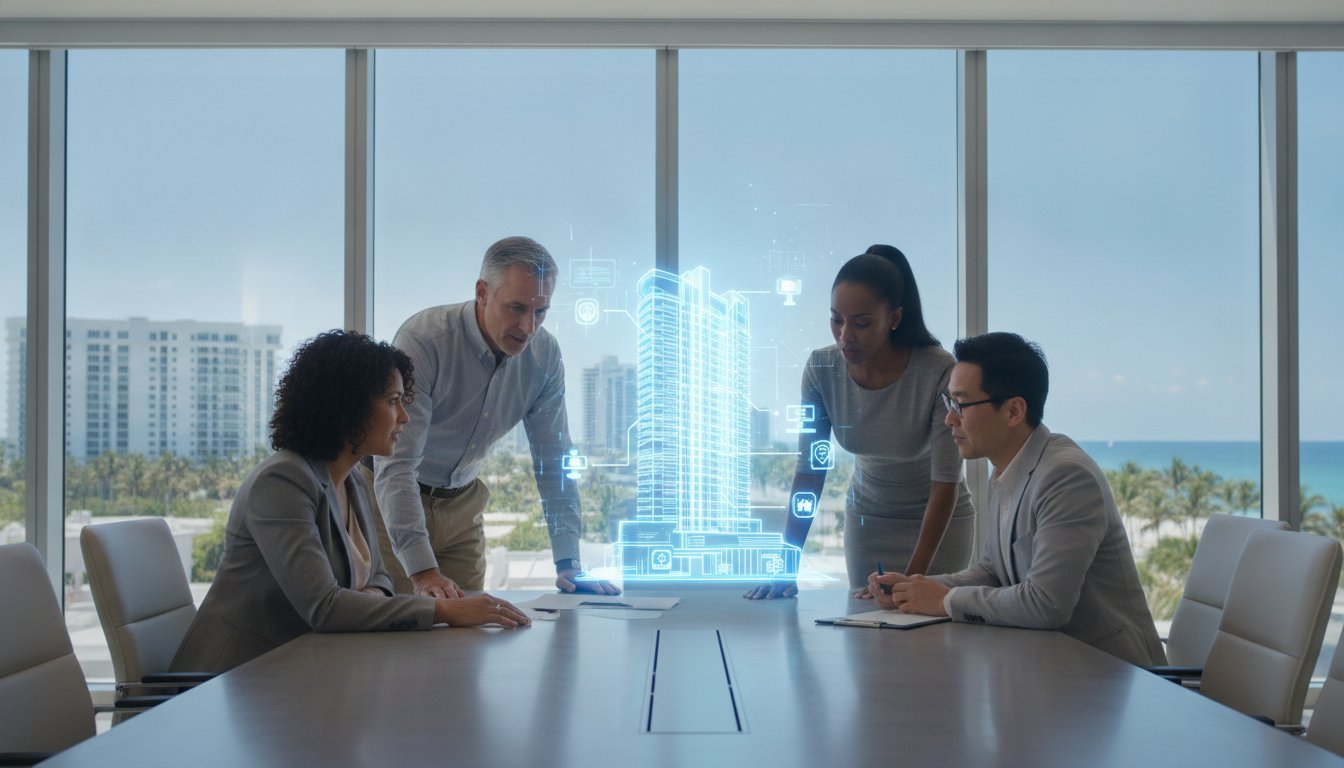
Involving a dedicated construction consultant at the design inception stage, rather than relying solely on an architect, protects the association's fiscal interests. Architects often prioritize aesthetic excess, but our "Owners First" approach focuses on functional structural integrity and budget compliance. We set realistic expectations for project duration and resident impact, bridging the gap between technical requirements and community life. Understanding the distinction between Maintenance vs. Capital Improvements at this stage prevents scope creep and ensures the project remains within the defined financial parameters.
Vetting Contractors and Managing Bids
Phase 3 focuses on managing the design team to ensure owner goals remain the primary driver of all construction activities. During Phase 4, we execute structured bid management to vet contractors beyond just the lowest price. This prevents the common pitfall of "apples-to-oranges" comparisons that often lead boards to select incomplete proposals. We develop standardized RFPs to ensure absolute transparency and accountability among all bidding parties. Utilizing expert Project Planning Services provides the necessary oversight to ensure that the final selection aligns with the community's long-term preservation goals and structural requirements.
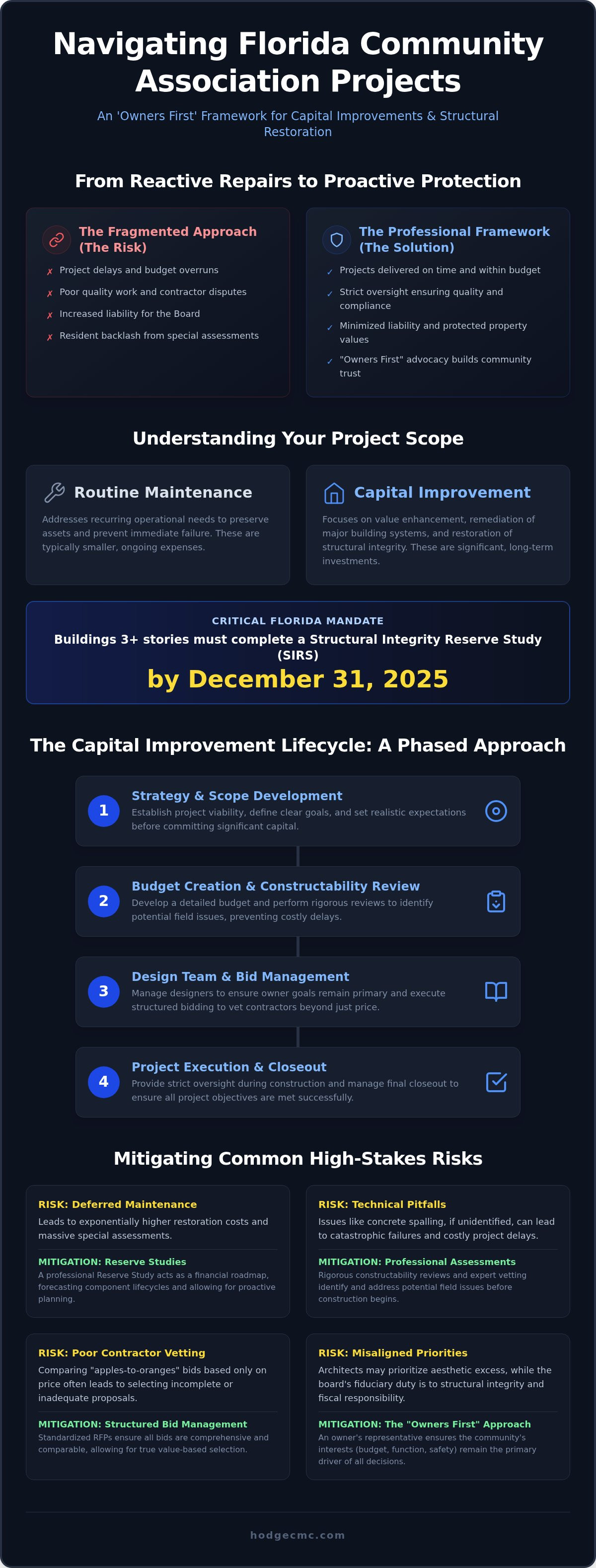
Mitigating Risks in Florida Condo and HOA Remediation
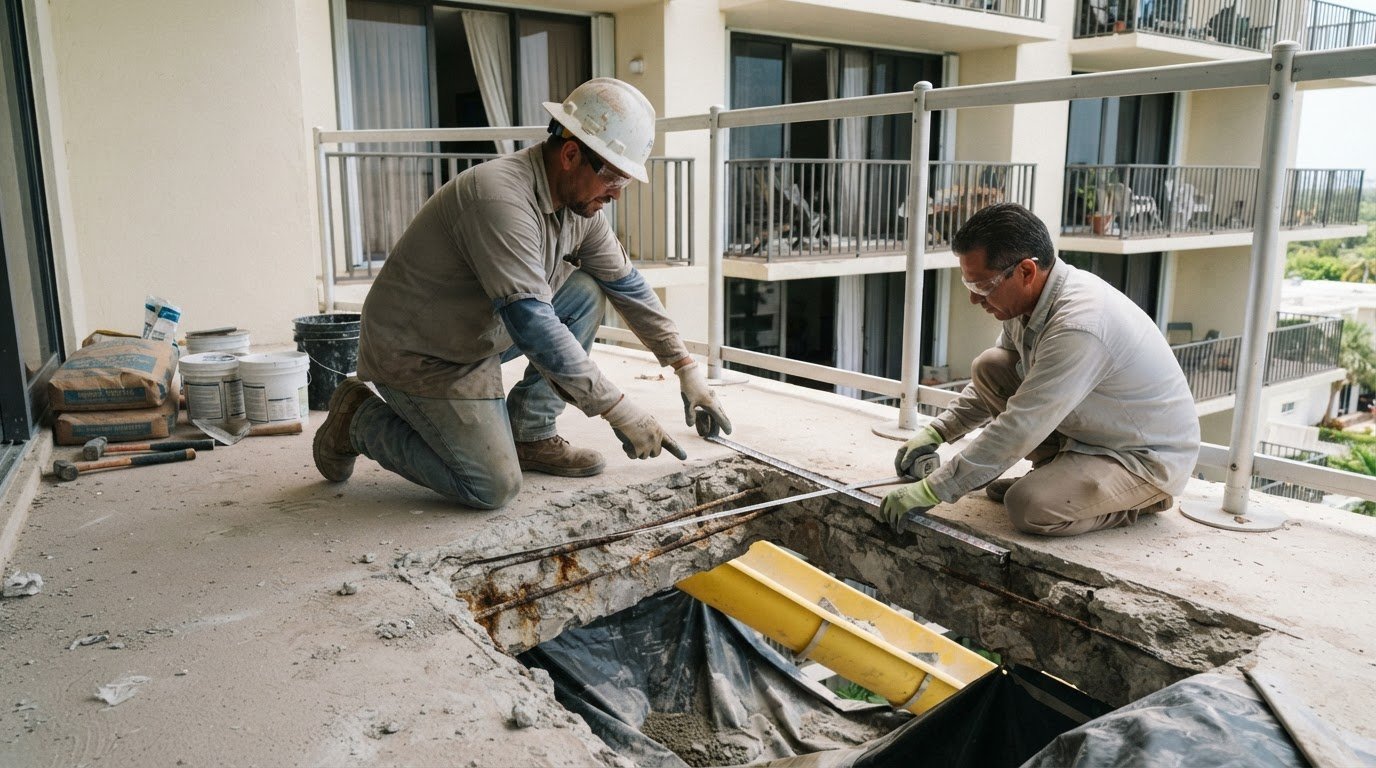
Florida’s coastal geography presents unique technical challenges that complicate HOA capital improvement planning. Coastal associations frequently encounter saltwater intrusion and the resulting concrete spalling, which can compromise structural integrity if not addressed through precise engineering interventions. Whether managing a boutique low-rise or a sprawling multi-building complex, HCMC provides construction consulting and project controls that apply to projects of all sizes. Our specialized approach to HOA capital improvement planning integrates technical expertise with strategic financial oversight to safeguard community assets against the specific environmental stressors of the Gulf and Atlantic coasts.
Florida-Specific Regulatory Challenges
Legislative updates have fundamentally altered the landscape of community management. Florida's structural reserve laws, specifically SB 4-D and SB 154, mandate rigorous milestone inspections for buildings three stories or higher once they reach 30 years of age; or 25 years if located within three miles of the coastline. These statutory requirements ensure that remediation work meets current State of Florida safety standards, yet they also introduce significant financial and operational pressure on boards. We act as a professional advocate to ensure that all mandatory structural inspections are incorporated into the long-term capital strategy without compromising the association's fiscal stability.
Proactive Risk Management Strategies
Meticulous schedule oversight remains essential to minimize community disruption during invasive construction phases. By maintaining a constant presence on the job site, HCMC identifies potential budget risks through proactive field assessments and real-time monitoring of contractor performance so boards don't face unexpected financial variances. This methodical approach also facilitates early dispute resolution, addressing stakeholder conflicts between contractors, engineers, and the board before they escalate into costly litigation. Our "Owners First" philosophy ensures that every remediation phase adheres to the highest quality standards while protecting the community's financial interests. Ensure your project remains on schedule with our expert construction consulting services.
The 'Owners First' Approach to Project Execution and Closeout
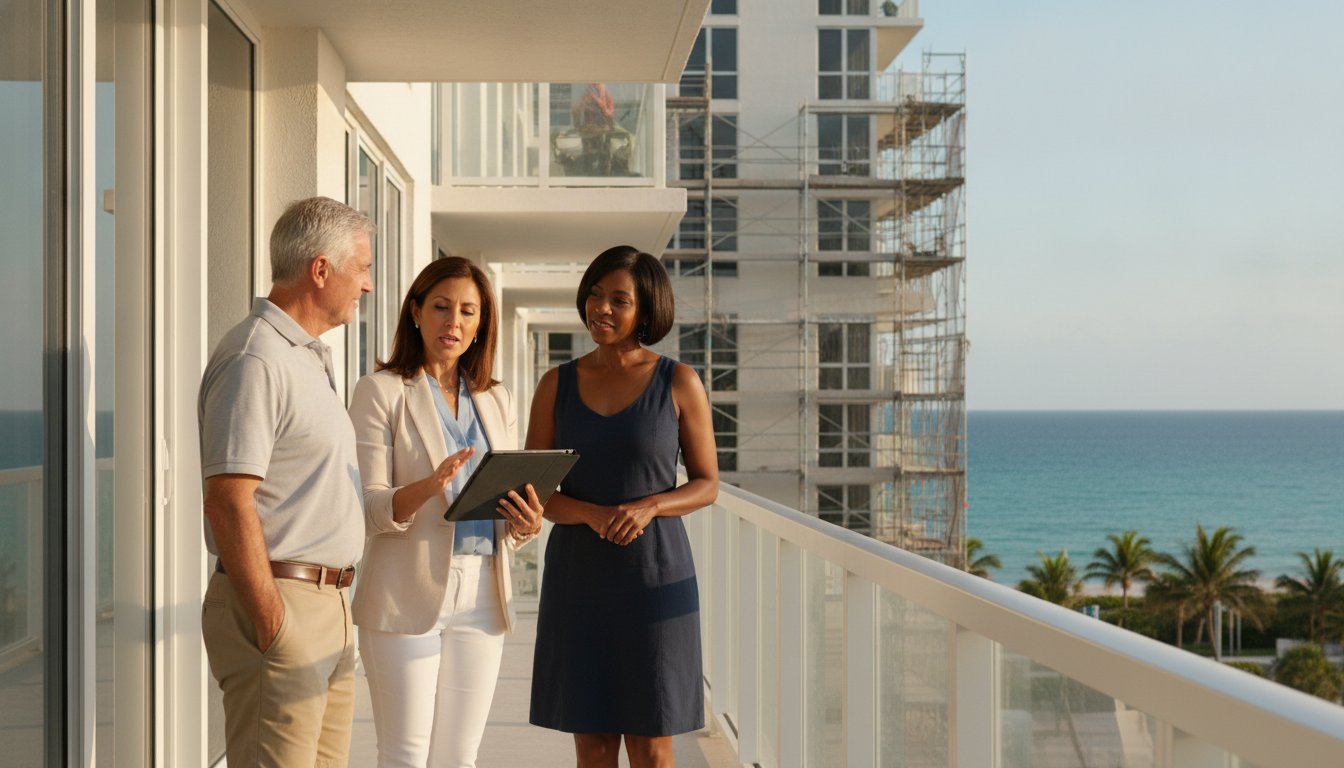
While general property management services address day-to-day operations, they often lack the technical depth required for complex CapX remediation. An independent representative acts as the board's professional advocate, ensuring that contractor interests never supersede the community's safety or budget. This active advocacy serves as the practical application of HOA capital improvement planning, transforming strategic goals into tangible structural results through consistent oversight of all construction activities.
Hands-On Management During Construction
Daily and weekly oversight allows for real-time monitoring of contractor performance. We enforce strict adherence to the approved schedule while performing rigorous quality control assessments. Verifying that the materials used and the workmanship provided align perfectly with the contract scope protects the association from future structural failures. This methodical supervision ensures that every phase of the project meets the high standards of operational excellence that Florida boards expect, maintaining a steady hand throughout the construction lifecycle.
Closing the Project: Beyond the Last Nail
Project completion involves more than finishing construction; it requires a disciplined closeout process. We manage the final punch list with meticulous attention to detail, refusing final payment until we verify 100% of the work. We secure all necessary warranties, finalized building permits, and executed lien releases to protect the association's legal standing and financial integrity. Securing these documents ensures that the community's HOA capital improvement planning efforts result in a fully documented, legally sound asset restoration. Protect your community's investment with HCMC's Owners First advocacy. By maintaining a professional and methodical approach until the final project closeout, we ensure that individual community goals remain the primary priority.
Securing Your Community's Structural and Financial Future
Effective HOA capital improvement planning requires a shift from reactive maintenance to a methodical construction advocacy framework. By prioritizing structural integrity and adhering to Florida's evolving safety mandates, boards can protect their residents and property values simultaneously. A comprehensive management lifecycle, from design inception to closeout, mitigates the technical and financial risks inherent in large-scale remediation projects. An independent owner's representative serves as the most effective safeguard against contractor interests and budget volatility.
HCMC provides the specialized expertise necessary to navigate complex Florida Condo Association remediation projects with precision. Our "Owners First" approach ensures that your community's interests remain the primary focus throughout every project phase. Don't leave your structural restoration to chance; rely on a seasoned partner who understands the high stakes of Florida construction. Partner with Hodge Construction Management & Consulting for your next HOA project to ensure operational excellence and ethical project delivery. Lead with confidence to secure a lasting legacy for your community.
Frequently Asked Questions
How do we fund a capital improvement project if our reserves are low?
Associations typically utilize special assessments or commercial loans to bridge funding gaps. While low reserves complicate HOA capital improvement planning, Florida boards must often mandate these assessments to comply with statutory structural safety requirements. Professional project planning services ensure that the final funding amount remains accurate; this prevents the need for secondary assessments due to poor initial budgeting or unvetted contractor proposals.
Does an HOA board need membership approval for all capital improvements?
Membership approval requirements depend entirely on the association's specific governing documents and the nature of the project. While routine repairs generally fall under board authority, material alterations or additions often necessitate a community vote. Boards should consult legal counsel to verify if a project constitutes a necessary structural repair; this status may exempt it from certain voting thresholds under Florida law during critical remediation phases.
What is the difference between a property manager and an owner's representative?
A property manager handles daily operations and administrative tasks, while an owner's representative provides specialized technical oversight for complex construction projects. Owner's representatives act as dedicated advocates who manage the comprehensive lifecycle from design inception to project closeout. They ensure contractor compliance with technical specifications and budgets; this role requires engineering and construction expertise beyond the scope of traditional property management or administrative oversight.
How long does a typical condo remediation project take in Florida?
Project duration varies significantly based on scope, but large-scale structural remediation often spans twelve to twenty-four months. Factors such as coastal weather conditions, supply chain availability, and the complexity of concrete restoration impact the final timeline. Methodical HOA capital improvement planning includes developing a realistic schedule that accounts for these variables; this ensures the board can set accurate expectations for residents regarding noise and site access.
What happens if a contractor exceeds the agreed-upon budget for a capital project?
Budget variances are managed through a formal change order process and strict contract enforcement. If a contractor attempts to exceed the budget without justification, the owner's representative scrutinizes the claim against the original contract scope and field conditions. Implementing rigorous project controls early in the lifecycle identifies these risks before they manifest; this ensures the board maintains financial control and avoids unauthorized expenditures during high-stakes remediation.
Comments