
Smart Building Technology Integration for Florida Construction Projects
By the end of 2026, the number of smart buildings worldwide is projected to reach 115 million, yet many Florida condo associations still treat advanced systems as a luxury add-on rather than a critical risk-mitigation tool. You likely recognize the immense pressure of rising insurance premiums and the constant threat that Florida's corrosive coastal environment poses to your building's infrastructure. Integrating sophisticated systems must not be a gamble against technical obsolescence or vendor mismanagement. This analysis details how strategic smart building technology integration for construction projects protects your association's long-term financial health and ensures operational excellence through every phase of a remediation or CapX project.
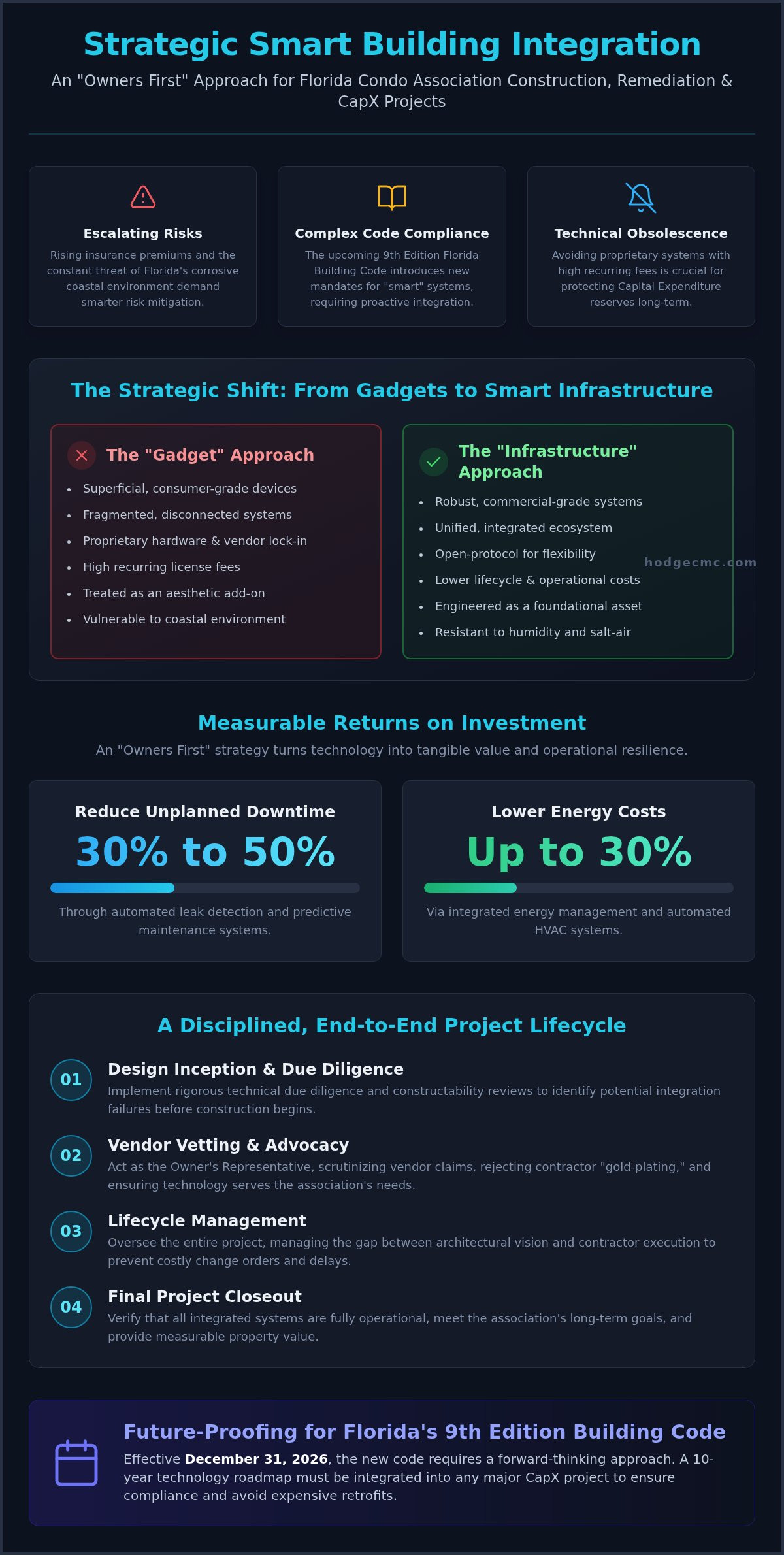
We'll examine how a disciplined, "Owners First" approach manages the complexity of the 9th Edition Florida Building Code requirements and helps you avoid the high costs of fragmented implementation. From the initial design inception to the final project closeout, you'll discover how professional project controls and expert advocacy turn complex technical requirements into measurable property value and lower operational costs. We provide the steady hand needed to navigate these high-stakes investments with confidence and precision.
Table of Contents
The Strategic Role of Smart Building Technology in Florida Construction
Within the context of Florida high-rises, smart building technology is far more than a collection of disparate gadgets; it's a sophisticated ecosystem of building automation systems that unify IoT sensors, automated HVAC, and advanced security protocols. Effective smart building technology integration for construction projects requires moving beyond consumer-grade devices toward robust "smart infrastructure" designed for the commercial scale of a condo association. This distinction is vital in Florida. Hardware must possess specialized resistance to high humidity and corrosive salt-air to avoid premature failure and ensure the longevity of the investment.
Our "Owners First" philosophy mandates that technology must serve the association's long-term operational goals rather than the convenience of a contractor. Every integrated system should be evaluated for its ability to lower lifecycle costs and simplify management. When technology is treated as an foundational element of the building's skeleton rather than an aesthetic add-on, it becomes a powerful asset for protecting the owners' financial interests.
Drivers of Adoption for Florida Condo Associations
South Florida associations face escalating property insurance premiums, making technology a primary tool for risk mitigation. Automated leak detection and predictive maintenance can reduce unplanned downtime by 30% to 50%, which directly impacts the association's bottom line. By implementing energy management systems that research indicates can yield up to 30% savings, boards can effectively lower monthly dues while enhancing the building's operational profile. These systems provide the data necessary to prove building health to insurers and stakeholders alike.
Future-Proofing vs. Technical Obsolescence
Success requires a strict adherence to open-protocol systems rather than proprietary hardware that locks the association into expensive, recurring license fees. With the 9th Edition of the Florida Building Code taking effect on December 31, 2026, boards must integrate a 10-year technology roadmap into any major CapX project. Proactive smart building technology integration for construction projects ensures compliance with new "smart" ventilation provisions while protecting the property from the high cost of technical obsolescence. Strategic foresight today prevents the need for expensive retrofits tomorrow.
Vetting Smart Tech Integration for HOAs and Condo Boards
Vetting smart building technology integration for construction projects requires a rigorous technical due diligence process that goes beyond simple vendor comparisons. Boards hold a fiduciary responsibility to ensure that every dollar allocated for remediation or CapX projects yields a tangible return. A comprehensive constructability review identifies physical and digital conflicts during the design phase, long before the first shovel hits the ground. This proactive assessment prevents the costly field orders that typically arise when sophisticated systems are forced into legacy building infrastructures without proper planning.
Board members often encounter skepticism from unit owners who view advanced technology as an unnecessary luxury. Justifying these investments requires shifting the conversation from "gadgets" to "operational resilience." By highlighting how integrated systems mitigate risks like water damage and electrical inefficiencies, boards can present a clear case for long-term savings. The Owner’s Representative serves as the primary defense against contractor "gold-plating," ensuring that the association doesn't overpay for redundant features or proprietary upsells that don't align with the building's specific needs.
The Owner's Representative as Technical Advocate
Our "Owners First" approach focuses on evaluating vendor claims against the practical engineering realities of high-density residential buildings. We manage the gap between an architect’s high-level vision and the granular requirements of the specialized contractors. For associations seeking to validate their technical roadmap, engaging specialized construction consulting ensures that every dollar spent serves a specific operational requirement. We scrutinize every proposal to ensure the technology is robust, repairable, and relevant to the association’s 10-year outlook.
Essential Smart Features for High-Density Residential Projects
In Florida's gated communities and high-rises, advanced access control and visitor management systems are no longer optional. These systems must integrate seamlessly with building automation systems (BAS) to provide centralized control over HVAC and common area lighting. Effective smart building technology integration for construction projects focuses on these high-impact areas where automation directly reduces labor costs and energy waste. By centralizing these controls, the association gains a steady hand over the building's most expensive operational variables.
Managing the Lifecycle from Design Inception to Closeout
Effective management of smart building technology integration for construction projects cannot be treated as an afterthought or a mid-project adjustment. We believe that true oversight begins at the point of design inception, where the technical architecture is established alongside the physical structure. By embedding our project controls from the very beginning, we ensure that every specialized consultant and contractor remains aligned with the association's specific operational requirements. This comprehensive approach prevents the common pitfall of bolting on technology to a project that has already progressed too far to accommodate it efficiently.
Pre-Construction Planning and Risk Mitigation
During the planning phase, we identify potential conflicts between sophisticated smart systems and the existing structural elements of a Florida condo. Remediation projects often present unique challenges where legacy wiring or concrete reinforcement may obstruct modern IoT sensors or automated hardware. We develop precise RFP requirements that force tech vendors to bid on an apples-to-apples basis. This methodology eliminates ambiguity and protects the association from the scope creep that often occurs when technical specifications are left to the contractor's discretion.
Execution and Quality Assurance on the Jobsite
On the jobsite, our role shifts to meticulous monitoring of the installation process. We ensure every component of the smart building technology integration for construction projects complies with the project specifications and the latest Florida building codes. Disputes between general contractors and specialized tech sub-contractors are common, often leading to schedule delays or compromised quality. As the Owner's Representative, we act as the steady hand in dispute resolution, prioritizing the association's interests to keep the project on track. Our presence ensures that the technical integration is executed with the same level of precision as the structural remediation.
The project lifecycle only concludes when the association’s staff is fully trained and capable of managing the new systems. We oversee a rigorous project closeout process that includes the delivery of comprehensive documentation and hands-on training sessions. This ensures the board isn't left with a complex system they don't understand or can't maintain. For associations planning a major capital expenditure, our Project Planning Services provide the structure needed to navigate these complexities successfully. We ensure a seamless transition from construction to long-term operational excellence.
ROI and Long-Term Value in Smart Remediation Projects
Strategic smart building technology integration for construction projects serves as a primary mechanism for stabilizing an association's Capital Expenditure (CapX) reserves. By converting reactive maintenance into a planned, data-driven process, boards can extend the lifecycle of major building components. This shift prevents the sudden, unfunded assessments that often plague aging Florida high-rises. Our "Owners First" approach prioritizes systems that empower the association with ownership and control, specifically avoiding proprietary hardware that requires high recurring license fees. We ensure the technology serves the owners' financial interests for the next decade, not the vendor's recurring revenue model.
Enhancing Asset Value for Unit Owners
In Florida’s increasingly competitive luxury market, modern smart infrastructure correlates directly with higher resale values and lower days-on-market for individual units. Buyers now prioritize buildings that demonstrate structural integrity and operational efficiency through verifiable data. Pursuing smart building certifications, such as LEED or Well, provides a prestigious third-party validation that attracts high-value residents and justifies premium pricing. These certifications prove that the association has invested in the long-term health and sustainability of the property, creating a distinct market advantage that protects every owner's equity.
Operational Excellence and Risk Management
Predictive maintenance sensors significantly reduce the risk of catastrophic failures by identifying anomalies in mechanical or electrical systems before they escalate into emergency repairs. This evidence-based management allows boards to make informed decisions about future remediation needs, moving away from guesswork and toward engineering precision. As the steady hand in complex Florida construction, HCMC ensures that every technical investment provides a measurable return on investment. Smart building technology integration for construction projects provides the fiduciary proof boards need to demonstrate responsible stewardship of the association’s assets. Protect your association's future and Consult with HCMC on Your Next Integration Project to ensure your next CapX project achieves long-term operational excellence.
Securing the Future of Your Association’s Infrastructure
Integrating advanced systems is no longer a luxury but a fundamental necessity for Florida associations navigating rising insurance premiums and evolving building codes. Successful smart building technology integration for construction projects requires a methodical approach that prioritizes long-term financial stability over superficial technical additions. By focusing on open-protocol infrastructure and rigorous lifecycle management, boards can effectively lower operational costs while significantly enhancing property values.
HCMC brings decades of experience in complex Florida construction to serve as your dedicated "Owners First" advocate. We provide the meticulous oversight required to manage project lifecycles from design inception to final closeout, protecting your association from unnecessary technical debt and vendor lock-in. Our expertise ensures that your remediation or CapX project remains a stable investment for years to come. Schedule a Strategic Consultation with HCMC to discuss how we can guide your board through the complexities of modern construction management. Your association's long-term resilience begins with a disciplined and expert hand.
Frequently Asked Questions
What is the role of an Owner's Representative in smart building technology integration?
The Owner's Representative acts as a technical advocate who bridges the gap between the association board and specialized technology vendors. They provide essential oversight during smart building technology integration for construction projects to ensure that the systems installed are necessary, functional, and aligned with the association's long-term operational budget. This prevents contractor led upsells and ensures that the technical infrastructure is integrated seamlessly into the broader construction or remediation project.
How does smart technology help Florida condo associations with insurance compliance?
Smart technology provides the verifiable data that insurance carriers increasingly require to assess risk in high rise environments. Systems such as automated water leak detection and predictive maintenance sensors mitigate the likelihood of catastrophic claims; this can lead to more favorable premiums. By demonstrating a proactive approach to risk management through integrated building automation, associations can prove their structural and operational resilience to insurers in the volatile Florida market.
Can smart building tech be integrated into existing buildings during remediation?
Remediation projects provide an ideal opportunity to modernize legacy infrastructure through smart building technology integration for construction projects. During major structural or envelope repairs, associations can install the necessary conduit, sensors, and networking hardware required for advanced building automation. This process requires careful planning during the design inception phase to identify potential conflicts with existing structural elements and ensure the new tech is compatible with the building’s current systems.
How do we prevent technology from becoming obsolete shortly after installation?
Preventing obsolescence requires a commitment to open protocol systems and a well defined 10 year technology roadmap. Boards should avoid proprietary hardware that locks the association into a single vendor's ecosystem or requires high recurring license fees. By selecting systems that adhere to industry wide communication standards, the association ensures that individual components can be upgraded or replaced without necessitating a complete overhaul of the building's entire technical infrastructure.
What are the most cost-effective smart technologies for an HOA to consider?
The most cost-effective technologies are those that provide immediate operational savings, such as smart thermostats, LED lighting controls, and automated HVAC diagnostics. Research indicates that smart thermostats can save an average of $220 annually by optimizing energy usage. Additionally, automated leak detection systems offer a high return on investment by preventing the massive remediation costs and insurance deductibles associated with water damage in high density residential buildings.

Comments